Old Tank Water Heater Out, Rinnai Tankless Unit In
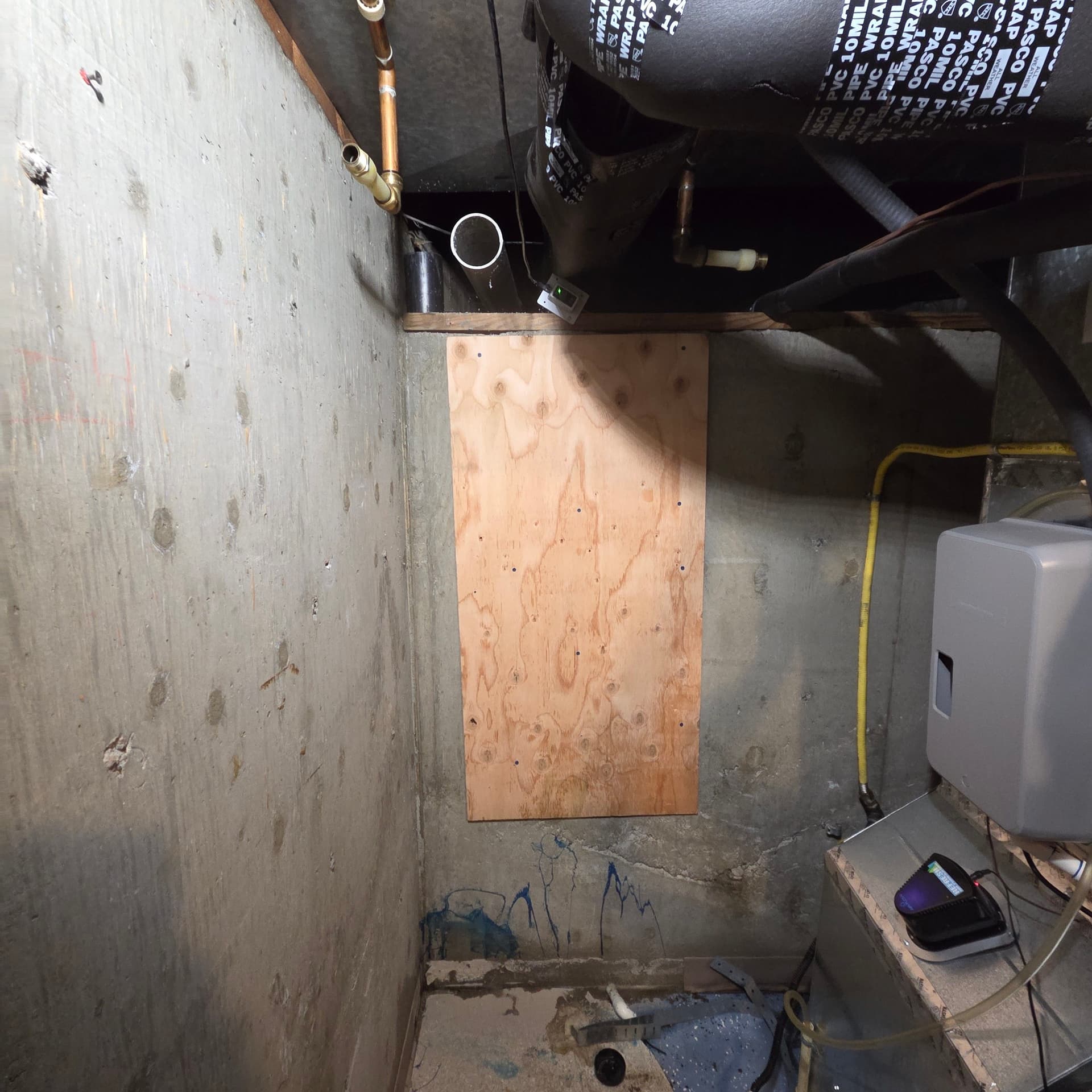
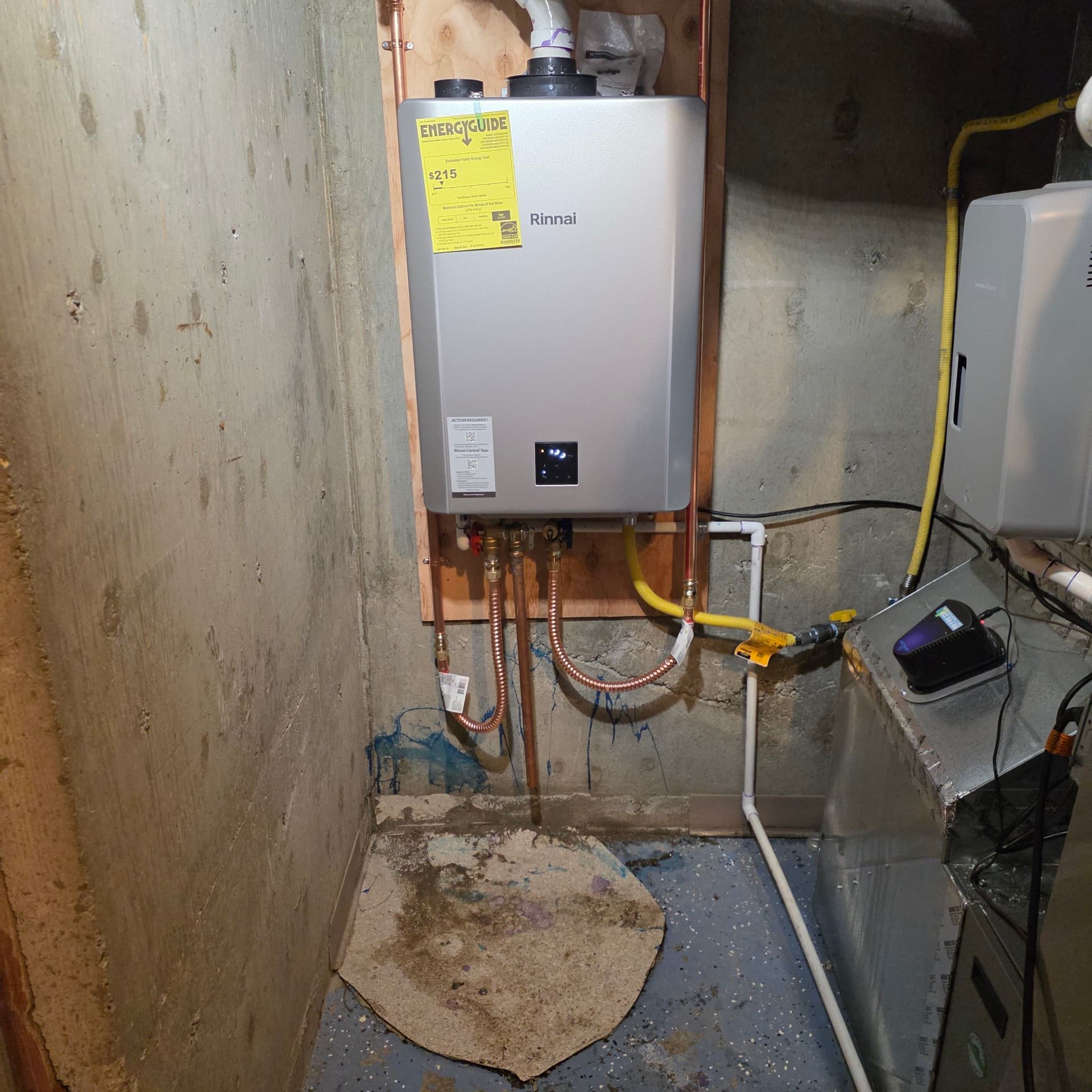
Here's what a proper tankless upgrade looks like from start to finish. The old tank unit was taking up serious floor space in a tight mechanical area. Once we pulled it out, we mounted a plywood backer to the concrete wall - something that gives the new unit a solid, secure mount and makes the whole installation cleaner and more serviceable down the road.
The new unit is a Rinnai RXP199i tankless water heater. It heats water on demand, which means it's not sitting there running a burner all day just to keep a tank warm. That alone makes a real difference on energy bills over time. The Energy Guide label on the unit shows an estimated annual energy cost of $215 - that's a number worth paying attention to when you're comparing it to what a traditional tank costs to operate year after year.
What we ended up with is a wall-mounted unit with clean copper connections for the water lines and a dedicated gas line tied in with proper fittings and shutoffs. Everything is accessible, organized, and done right. In a cramped mechanical space like this one, that level of care matters - you don't want a messy install in a spot that's already hard to work in.
Tankless water heaters are a straightforward win for most homes. No more running out of hot water, no more wasted energy reheating a 50-gallon tank, and you get back usable floor space in the process. The Rinnai line in particular has a strong track record for reliability, and the RXP199i is built to handle whole-home demand without breaking a sweat.
If you've been putting off replacing an aging tank unit, this kind of swap is one of the better investments you can make in your home's mechanical systems. We do these installs regularly and know exactly what it takes to get them done cleanly and correctly the first time.