LG Smart Inverter Heat Pump Diagnostic and Internal Inspection
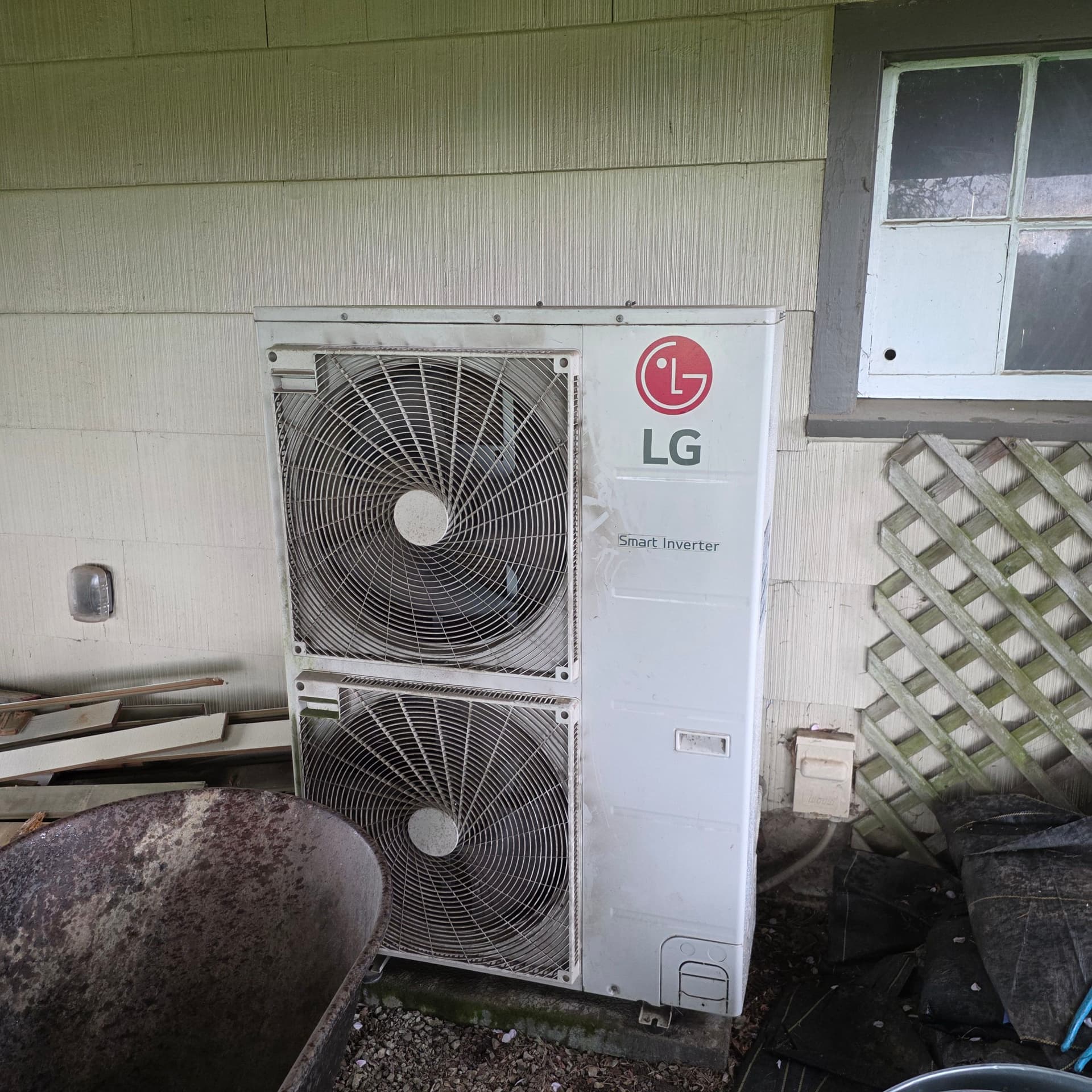
Most heat pump problems don't start big. They start small - a weird noise, a slight drop in efficiency, or the unit just not quite keeping up. Left alone, those small signs tend to turn into expensive repairs. That's exactly the kind of situation a proper diagnostic is designed to catch early.
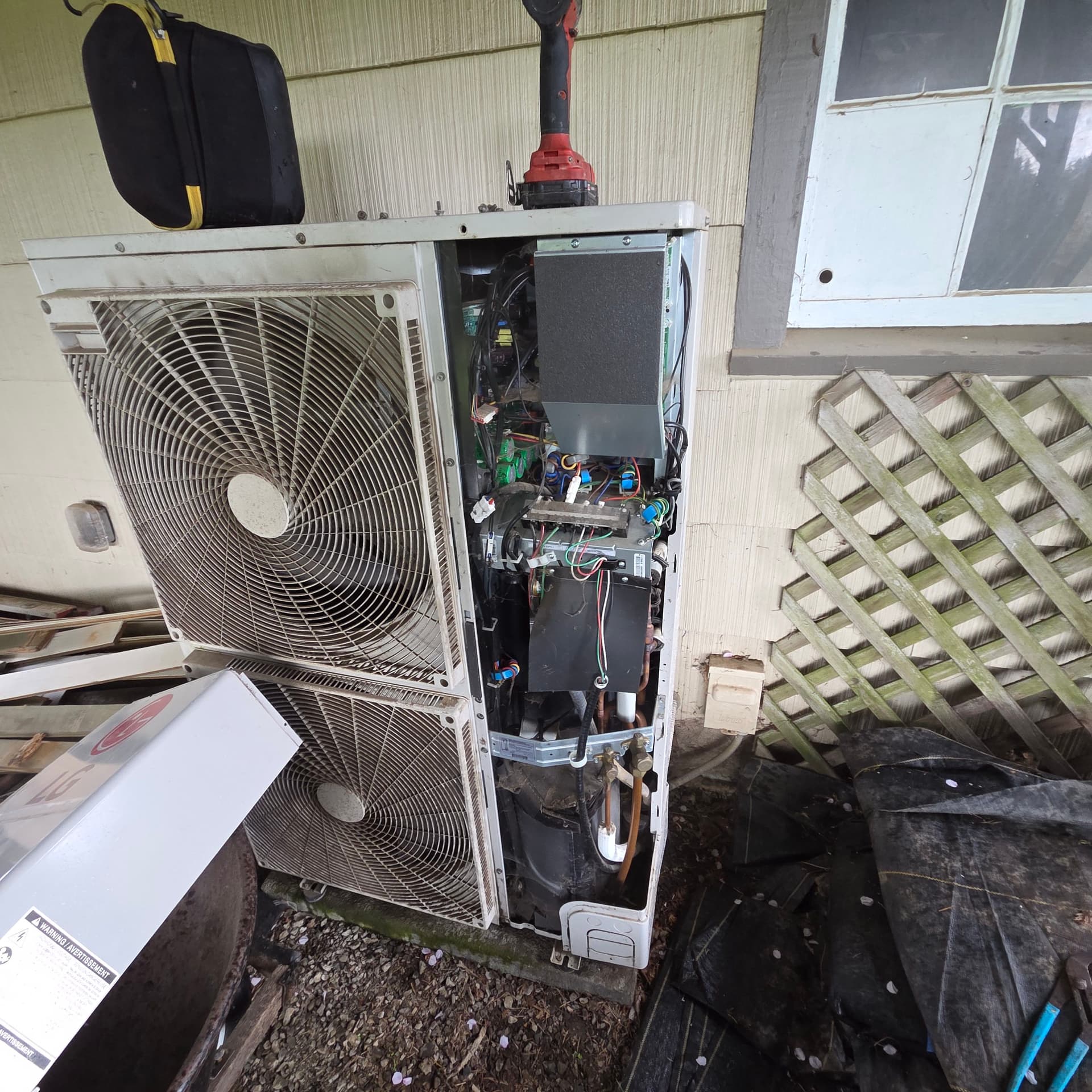
We recently worked on an LG Smart Inverter heat pump that needed a full checkup. This is a dual-fan outdoor unit, and while it looked okay on the outside, the real story was inside. We pulled the panel and got eyes on the internal components - the control board, wiring connections, compressor area, and refrigerant lines - to see what was actually going on.
That's the thing about inverter-based systems. They're more efficient than traditional single-stage units, but they're also more complex. The variable-speed technology means there are more components that need to be in good shape for the system to run properly. A thorough diagnostic on a unit like this isn't just about checking one thing - it's about understanding the whole picture.
When we open up a unit like this, we're looking at everything together. Boards, connections, refrigerant lines, mechanical components - it all matters. Catching a failing part or a loose connection at this stage is the difference between a manageable repair and a much bigger bill down the road.
If your heat pump has been acting up - short cycling, not heating or cooling like it should, or making sounds it didn't used to make - it's worth having someone take a closer look. A solid HVAC diagnostic doesn't just tell you what's wrong. It tells you what's coming.